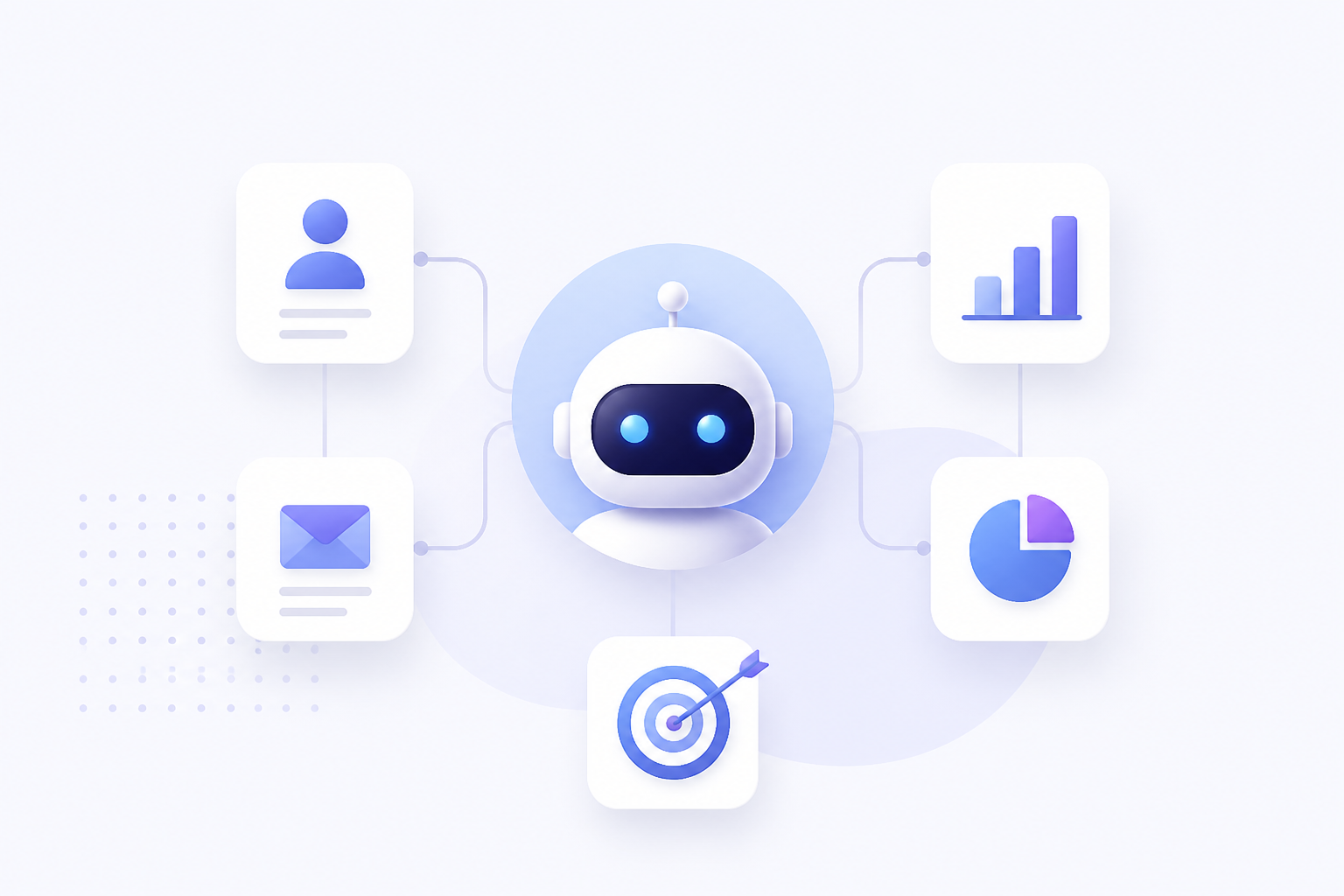
Today, Artificial Intelligence (AI) is reshaping the way companies market their products and engage with customers. AI in marketing automation offers powerful tools for analyzing data, predicting trends, and connecting with customers through sentiment analysis. This article explores the role of AI in digital marketing, focusing on how AI-driven tools enhance customer experiences and make marketing efforts more effective.
What is the Role of AI in Marketing?
Data Analysis
AI helps companies gather and process vast amounts of customer data in real-time, revealing insights about preferences, behaviors, and needs. This means businesses can make informed decisions based on solid data, leading to better outcomes and more efficient marketing.
Customer Targeting and Personalization
AI’s ability to analyze data allows for precise audience targeting. With AI, companies can tailor their messages to specific segments, offering personalized content that resonates with individual customers.
Predicting Trends
AI uses past data to anticipate future customer behavior and market trends. This predictive power helps businesses stay ahead of competitors and make strategic decisions about product recommendations, promotions, and timing.
Understanding AI in Marketing Automation
AI-Powered Marketing Automation
In traditional marketing automation, businesses set up repetitive tasks, such as sending emails or posting social media updates, on a schedule. AI enhances this process by using algorithms to learn from customer interactions, adjust content, and personalize messages.
Machine Learning and Algorithms
AI in marketing uses machine learning and other algorithms to simulate human-like decision-making. This helps brands analyze big data, predict customer preferences, and make real-time decisions that improve campaign performance.
Personalization with AI Marketing Tools
Audience Segmentation
AI helps marketers categorize audiences based on detailed behaviors and preferences. This is known as audience segmentation, where AI can group customers by interests, buying habits, and engagement history, enabling targeted marketing.
Customized Content and Dynamic Messaging
AI generates personalized content that matches the interests of each customer, increasing engagement rates and conversion rates. For example, it might send different messages to different age groups, geographic areas, or past purchase history.
Predictive Product Recommendations
By using predictive analytics, AI can recommend products to customers based on what they’ve shown interest in before. This boosts sales and improves customer retention as customers receive more relevant offers.
Enhanced Customer Insights and Predictive Analytics
Real-Time Data Analysis
AI processes data as it comes in, allowing marketers to act quickly on new information. For example, if a product is suddenly trending, AI can help adjust campaigns to capitalize on the demand.
Customer Journey Mapping
AI helps track the customer journey, which is the path a customer takes from their first interaction with a brand to purchase and beyond. By mapping this journey, marketers understand where customers might drop off and can create strategies to keep them engaged.
Forecasting Trends and Making Data-Driven Decisions
With predictive analytics software, AI tools can forecast market trends. This gives businesses the power to create strategies based on likely future events, making marketing efforts more proactive.
Streamlining Campaign Management and Optimization with AI
Automated A/B Testing
AI-powered A/B testing runs variations of a campaign to determine which elements (such as headlines or images) work best. The software can automatically choose the winning version, maximizing engagement.
Optimizing Delivery Times
AI uses data on when users are most active to send emails or deliver ads at the perfect time. For example, if AI finds that customers often open emails in the evening, it will time campaigns accordingly to improve open rates.
Budget Optimization
AI monitors campaign performance in real-time, allowing companies to adjust spending. For instance, if one ad is performing better than others, AI can allocate more budget to that ad, maximizing return on investment (ROI).
AI-Driven Customer Support with Chatbots
24/7 Customer Service
AI chatbots offer immediate, around-the-clock responses to customer questions, boosting customer satisfaction and helping with simple inquiries. This keeps customers engaged without needing human support for every question.
Lead Qualification
AI chatbots can assess potential customers by asking questions and analyzing responses, passing qualified leads to sales teams, which increases lead generation and conversion rates.
Faster and Consistent Support
Chatbots also handle common issues quickly, leaving complex problems to human agents. This setup improves response times and overall customer experience, which leads to greater loyalty.
The Future of AI in Marketing Automation
Voice and Visual Search Optimization
As more people use voice search and visual search tools, AI helps companies optimize content to match how customers are searching. This approach improves search engine visibility and attracts more traffic.
Advanced Predictive Modeling
AI algorithms are constantly improving, allowing businesses to anticipate customer needs. For example, retailers might use AI to predict product demand for the upcoming season, helping them prepare targeted campaigns early.
Automated, AI-Driven Campaigns
In the future, AI will enable fully automated campaigns that adjust themselves based on user responses and preferences, making marketing automation even more efficient and effective.
Conclusion
Artificial Intelligence is changing the way digital marketing works, offering tools that provide insights, personalize messaging, and streamline tasks. With AI-powered marketing automation, businesses can connect with customers in smarter, more effective ways, offering a better experience and improving sales. As AI technology advances, companies that adopt these tools will likely stay ahead, delivering greater value to their customers.
Ready to transform your marketing strategy with the power of AI?
Contact CloudPSO today to learn how our advanced and effective solutions can enhance your marketing automation and drive better results for your business!