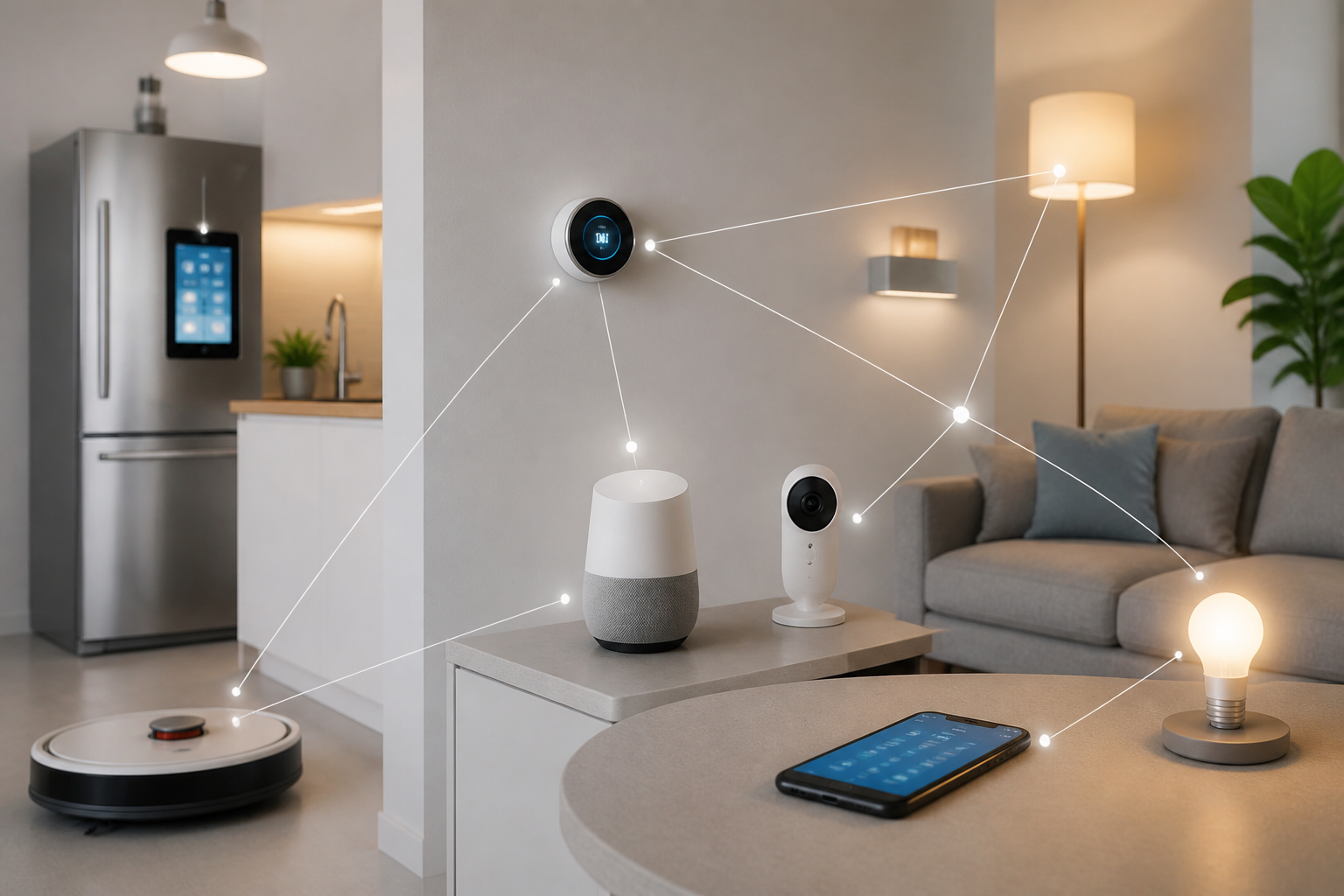
The Internet of Things (IoT) is redefining how we interact with technology, making our world more connected, efficient, and intelligent. From improving daily convenience to driving industrial innovation, IoT is influencing nearly every aspect of our lives and shaping the future of technology.
Understanding IoT:
What is IoT?
IoT means Internet of Things, refers to the interconnected network of physical devices embedded with sensors, software, and internet connectivity. These devices can gather, share, and act on data, automating processes and enabling smarter decision-making. Whether it’s a thermostat adjusting the temperature based on your preferences or machinery in a factory monitoring performance, IoT is all about optimizing tasks through connectivity.
IoT’s Role in the Future of Industries
Smart Cities
IoT is crucial for creating sustainable and efficient urban environments. Smart cities use IoT to reduce energy waste, improve transportation systems, and enhance public safety. For example, connected streetlights dim during low traffic periods, and traffic sensors analyze flow to minimize congestion.
Healthcare
In healthcare, IoT enables remote patient monitoring and improves diagnosis accuracy. Devices like smart wearables track vital signs, alerting doctors in real time about health issues. These innovations improve patient outcomes and reduce hospital visits.
Manufacturing
Industrial IoT (IIoT) is revolutionizing manufacturing processes by introducing predictive maintenance and real-time monitoring. Factories equipped with IoT sensors can detect equipment issues before they lead to downtime, improving efficiency and reducing costs.
Agriculture
IoT-based solutions in agriculture allow farmers to monitor soil conditions, water usage, and crop health. Automated irrigation systems, powered by IoT, conserve water and boost yields. These technologies make farming more efficient and sustainable.
IoT’s Influence on Everyday Life
IoT is not just for industries; it’s also transforming daily life. Smart home devices like voice-controlled assistants, smart thermostats, and connected security cameras offer convenience, security, and energy savings. In transportation, connected cars equipped with IoT systems provide navigation assistance and enable autonomous driving, reshaping the future of travel.
Emerging IoT Trends Shaping the Future
- 5G Connectivity
The advent of 5G networks is accelerating IoT innovation. Faster speeds and lower latency allow for seamless communication between devices, supporting real-time applications like autonomous vehicles and smart city infrastructures. - AI and IoT Integration
Artificial Intelligence (AI) is enhancing IoT by enabling predictive analytics and automation. AI-powered IoT systems can analyze vast amounts of data, helping businesses make smarter decisions and automate complex tasks. - Edge Computing
Edge computing processes data locally on IoT devices instead of relying on cloud servers. This reduces latency, improves response times, and enhances data security, making it ideal for applications requiring immediate action. - Sustainability Efforts
IoT is promoting sustainability by enabling energy-efficient systems and reducing waste. Smart grids optimize electricity usage, while connected devices in agriculture minimize resource consumption.
Challenges IoT Must Address
Despite its benefits, IoT faces several challenges:
- Data Security and Privacy: With millions of devices connected, ensuring data protection is critical. IoT systems must implement robust security measures to prevent breaches.
- Compatibility: The lack of universal IoT standards can lead to compatibility issues between devices.
- Energy Consumption: IoT devices require consistent power, necessitating efficient energy solutions.
Looking Ahead: The IoT-Driven Future
The future of IoT is bright, with endless possibilities for innovation. As IoT devices become more advanced and accessible, they will revolutionize industries, transform cities, and improve quality of life. Integrating AI, edge computing, and 5G will further enhance IoT’s capabilities, opening doors to smarter systems and new business opportunities.
For businesses and individuals alike, embracing IoT is no longer optional but necessary. We can create a more connected, efficient, and sustainable future by adopting IoT solutions.
Wrap Up:
IoT is not just a technological trend; it’s a movement shaping the way we interact with the world. From smart homes to industrial automation, the possibilities are endless. As we move forward, IoT will remain at the heart of innovation, redefining the boundaries of what technology can achieve.
Visit Cloudpso today and discover how you can partner with us to shape a smarter, more connected future.